
Family Threads
Some patterns don’t begin with you.
They begin with a grandmother who waited. A grandfather who disappeared. A mother who sacrificed. A father who carried wounds he never named. And somewhere in that inheritance is a thread that runs directly into your life today—into your relationships, your blocks, your recurring struggles, and your unexplained grief.
The Family Threads reading doesn't look for villains in your story. It searches for the patterns—the ones that shaped you, the ones still running, and the ones you are ready to rewrite. The reading is not about blame but about recognizing the invisible inheritance that lives in you today—and where it began—so you can rewrite your story. Decide what to keep, what to release, and what to transform.
That is what the cards can show you. Not just where you are. But where it began. And where you can go.
The Readings
Family Threads
60 minutes
Live via Zoom or phone
$145
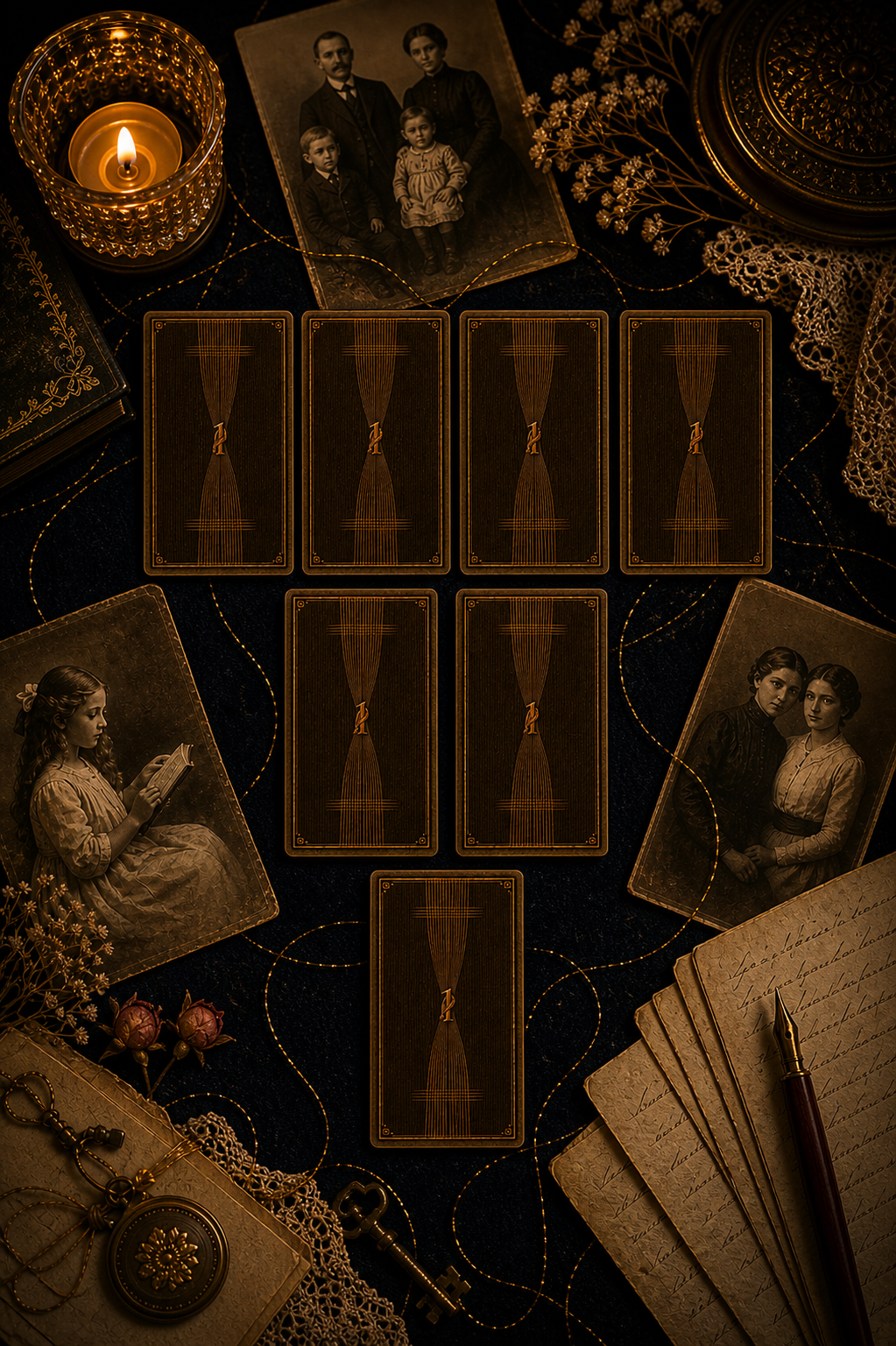
A pyramid spread reading traces patterns through your parents and grandparents. Each position in the spread holds a person from your immediate lineage. Each card reveals what they carried, what they passed forward, and how it lives in you today.
To prepare, bring:
The names of your parents and grandparents
A question or theme you'd like to explore — about yourself, about them, or about the patterns you most want to understand
Sessions are limited each week.
Family Threads: Deep Roots
90 minutes
Live via Zoom or phone
$195
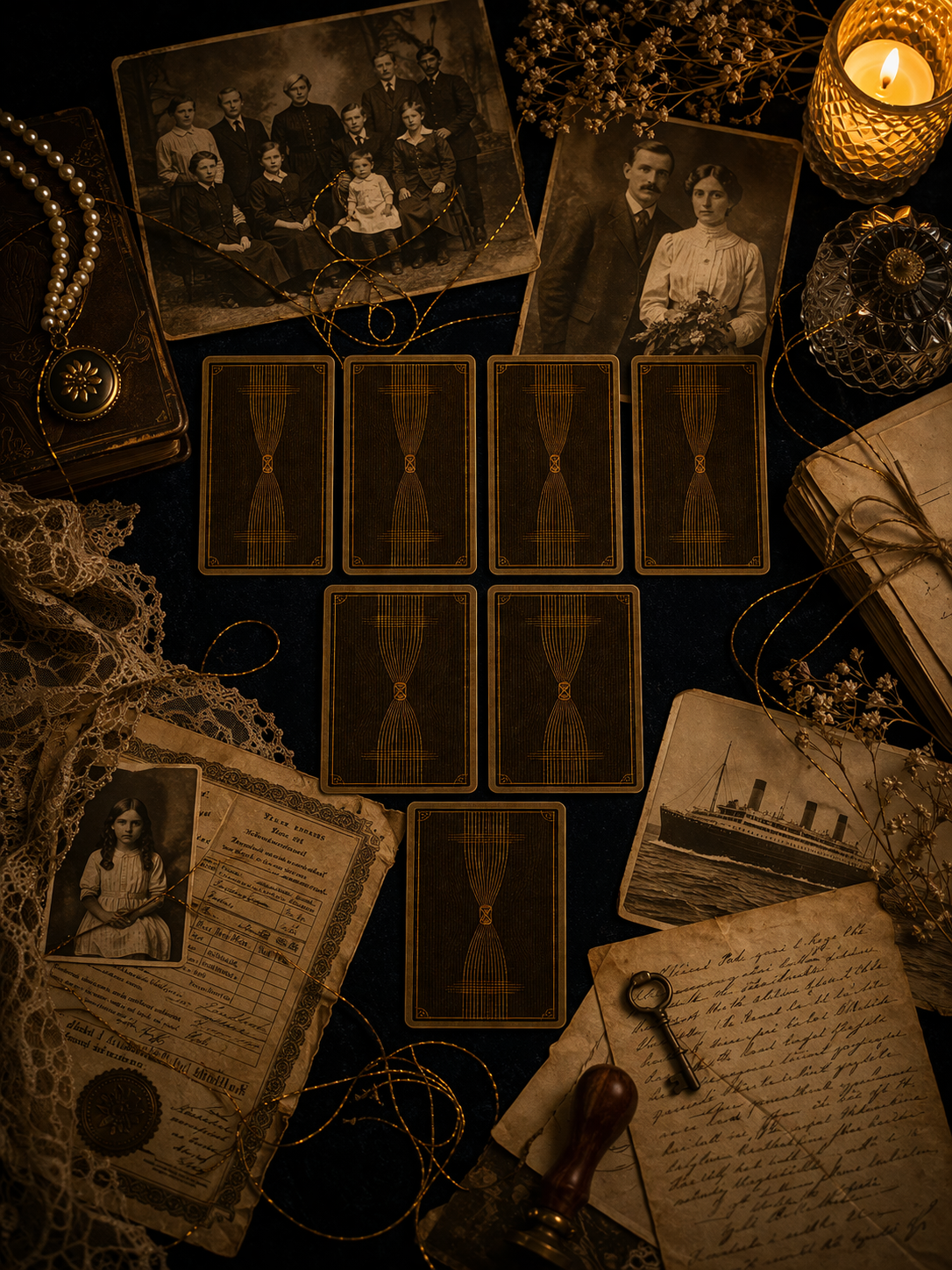
Everything in the Family Threads reading, plus the opportunity to bring ancestral documents into the session.
Birth certificates. Immigration records. Marriage certificates. Family photographs. Letters. Historical records.
When the historical record and the cards speak the same truth, the reading goes deeper than either could alone. The documents provide the foundation for what the cards reveal. The cards illuminate what the documents cannot say.
To prepare, bring:
The names of your parents and grandparents
Any ancestral documents you wish to explore
A question or theme you'd like to explore — about yourself, about them, or about the patterns you most want to understand
A reading from my own lineage
I have sat with my own family in the tarot cards. I have drawn for my parents, grandparents, and great-grandparents, and I have watched the cards reveal what history already held. What follows is that reading. I share it not because my family’s story is unusual, but because it is not. Sacrifice, departure, endurance, and love running alongside loss—these are not extraordinary. They are the threads most families carry. The cards simply make them visible.
My Mother’s side
My mother’s name is Antonietta. Her card was the Hanged Man, and I understood it the moment it appeared.
Antonietta grew up in postwar Italy with her mother, Maria Michela; sister, Anna; and her father, Domenicangelo, who had emigrated to Venezuela to find work and then, in the way that absence sometimes becomes permanent, stopped sending word. He had not died. He had simply disappeared into a country that was not his own, and Maria Michela was left a white widow: a married woman with no husband, no income, and no path forward in a country still recovering from war.
Antonietta was the eldest daughter. She made a choice that really wasn’t a choice. She agreed to marry a man named Antonio by proxy, the legal arrangement that transferred her across an ocean to a new life she had not seen. In doing so, she secured her mother's and sister’s survival. She sacrificed her own life, freely chosen, for the lives of the people she loved most.
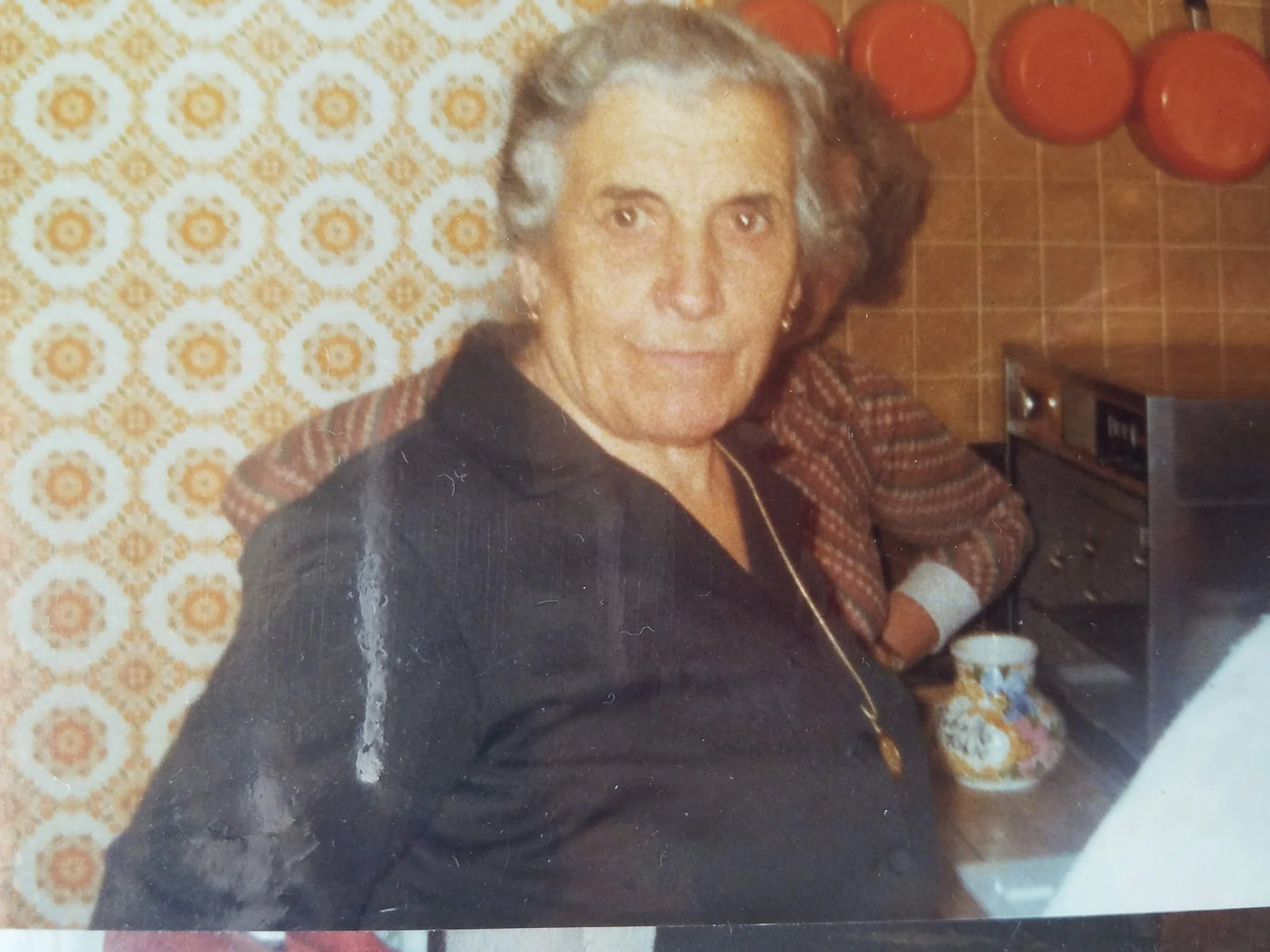
Concetta Gullo Bloise, later years.
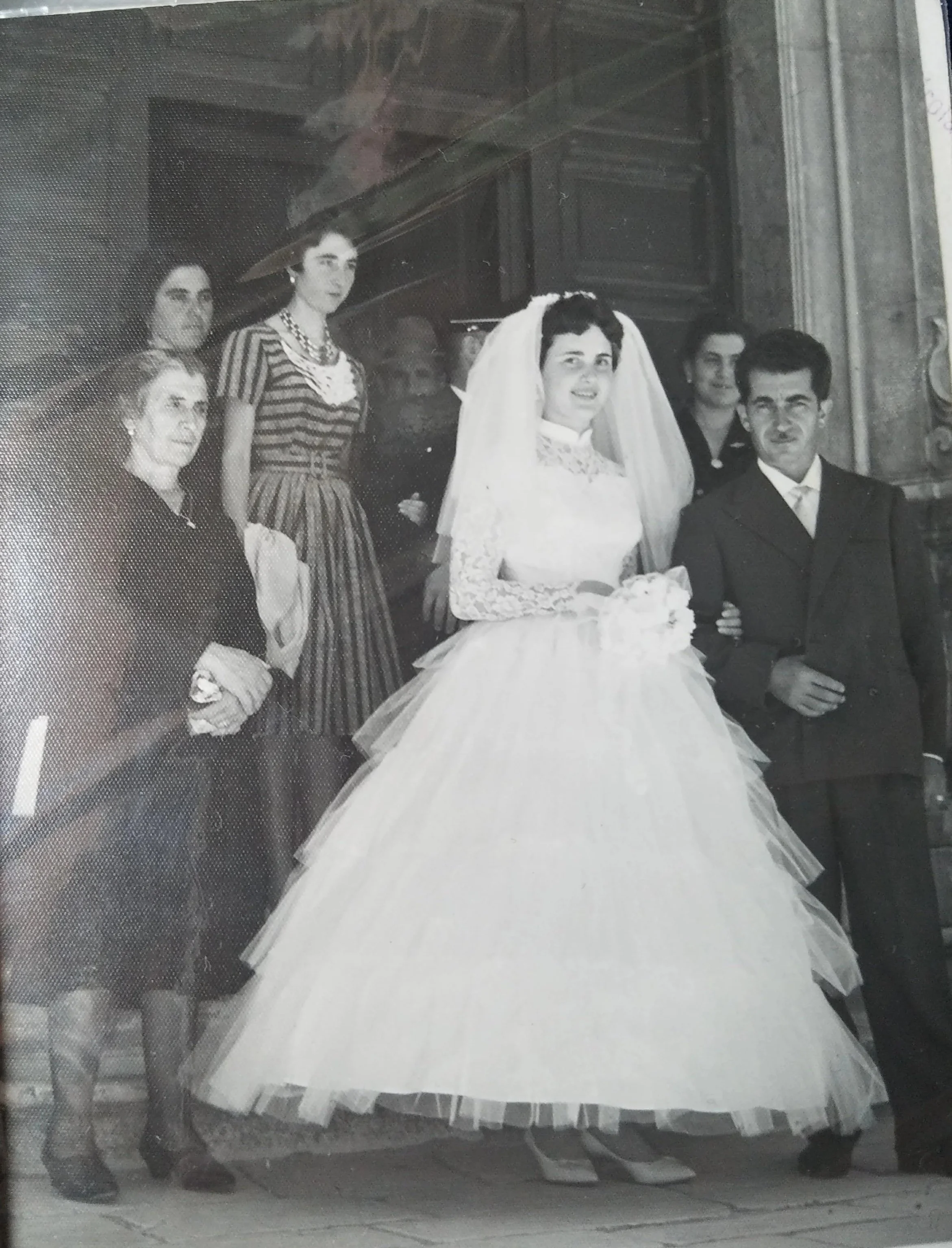
Antonietta's wedding by proxy, Italy. Left to right: Concetta, Carmela, Antonietta, Francesco Melega standing in for Antonio, Maria Giuseppa, and Anna. Antonio was in Venezuela.
That is the Hanged Man. Suspended. Not by weakness but by love. Not defeated but stilled in service of something larger than herself.
The clarifying card was the Chariot. And that was exactly right. Because Antonietta did not stay suspended. She crossed an ocean. She arrived in Venezuela carrying a life she had not chosen and found, waiting for her, not just the husband she had married by proxy but her own lost father. Antonio had found Domenicangelo wandering and displaced in Venezuela and had taken him into his home. Antonietta’s sacrifice, the act that had looked like pure loss, was the very thing that brought her father back to her.
The Chariot does not always mean triumph. Sometimes it means you carry everything you were given and you move anyway. And, sometimes, the moving brings you home to something you thought was gone.
Her grandfather Carlo, my great-grandfather, drew the Devil. Not evil. Attachment. Obligation so total it becomes a chain. Carlo made crossing after crossing across the Atlantic after the feudal system ended in Italy, driven by his duty to provide for his family, building a house in Italy while almost never living in it. His daughter Maria Michela grew up without him long enough. Her daughter Antonietta grew up without her own father long enough. And that absence, the pattern of men who left and women who waited, threaded itself forward through the generations until it arrived at Antonietta’s Hanged Man, her proxy wedding, her ocean crossing, and her unexpected reunion.
My father's side
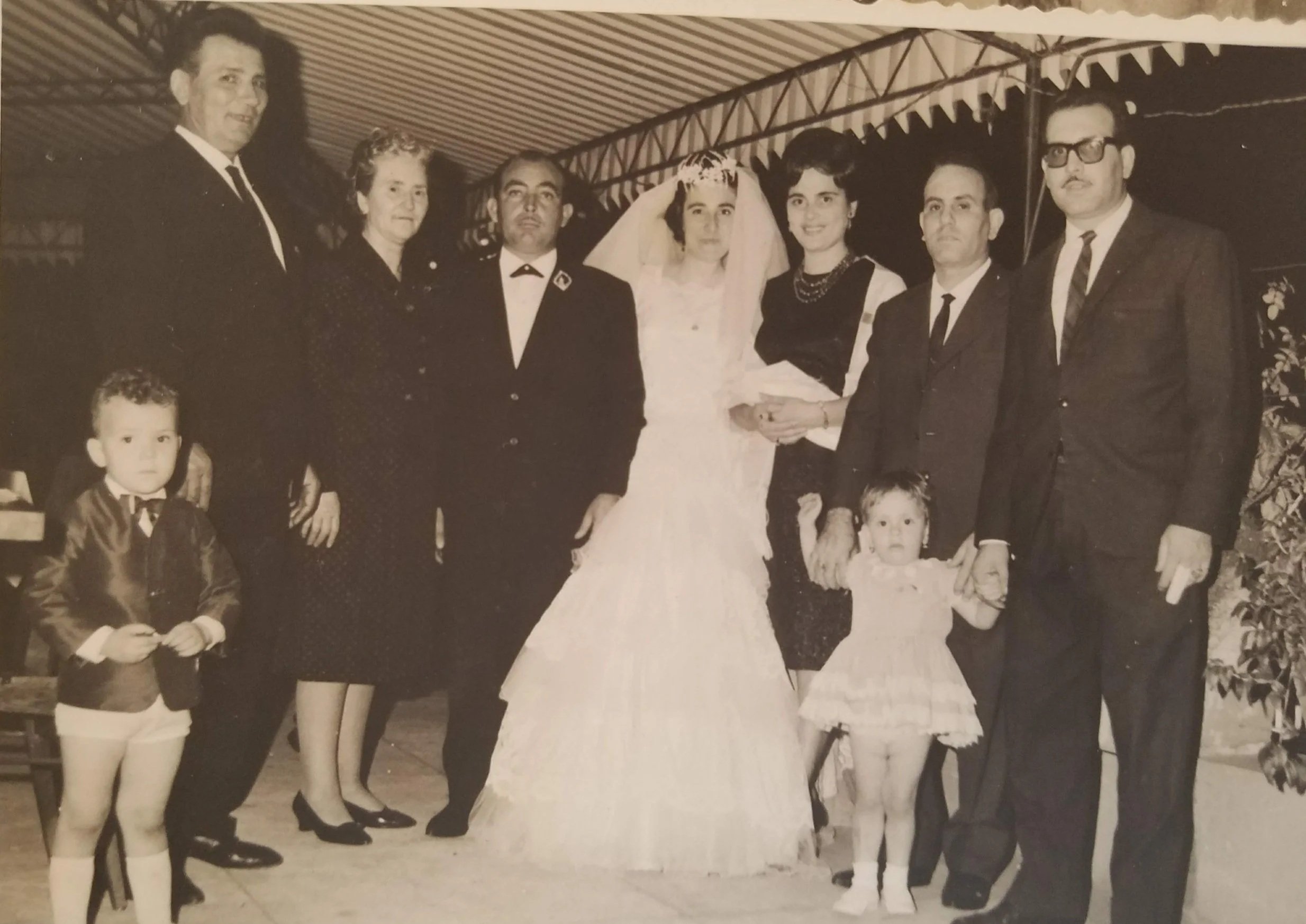
Anna and Alessandro's wedding, Caracas, Venezuela. Left to right: Domenicangelo, Maria Michela, Alessandro, Anna, Antonietta, Antonio holding Connie, Giuseppe. The family, reunited.
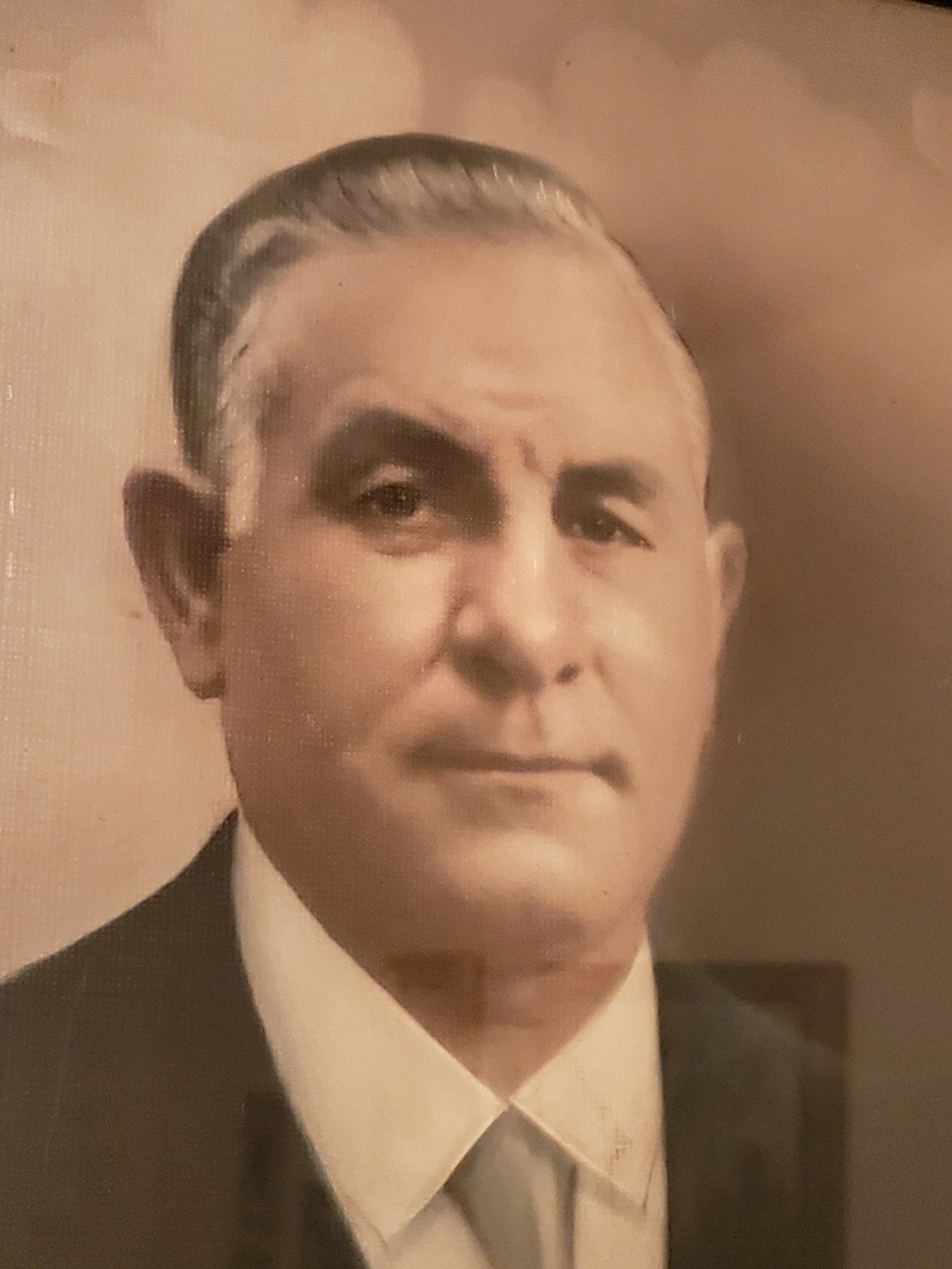
Carmelo Scarfone, Italy
My father’s name is Antonio. His father Carmelo drew the Five of Swords, with three clarifying cards: the Five of Pentacles, the Six of Swords, and the Four of Swords. Four cards that together told the story of a man who fought, lost ground, was carried away by what he could not overcome, and came to his final rest. Carmelo died of liver disease in 1956. He was 55 years old, four months short of 56.
He left behind his wife Concetta and four children. Maria Francesca was 27. Antonio was 24. Maria Giuseppa was 20. Giuseppe was 18. Old enough to survive. Young enough to still need a father. Concetta had raised them through the war years, through Carmelo’s illness, through everything that postwar Italy asked of a family with no patriarch and no margin. And then Carmelo was gone.
In the years that followed, the children left. Maria Francesca married and moved to France. Antonio went to Venezuela. Giuseppe followed him. One by one, three of her four children crossed out of Italy and into other countries and other lives. Only Maria Giuseppa stayed.
Concetta was not an easy woman. She was known for her roughness, her bitterness, and the jagged edges that people around her felt and sometimes judged. But when I read her cards and sat with her history, I understood something that judgment never could. She had raised four children alone. She had given everything she had to keep them. And then they left. Her sons did not return to visit until she was in her late sixties or early seventies. She had Maria Giuseppa, and she had the life she had built in the ruins of the one she had planned, and that was what remained.
The bitterness was not a character flaw. It was the entirely rational response of a woman who had been left, twice, by everyone. First by death. Then by life pulling her children toward their own futures. The cards did not judge Concetta. They simply showed me what she had carried and why.
The Gathering
When Antonietta arrived in Venezuela, she found not only her husband and her lost father but also the beginning of something none of them could have planned. Her mother Maria Michela and her sister Anna, freed now from the stuckness that had held them in postwar Italy, left and followed her to Venezuela. The family that had been scattered by absence and necessity began, slowly, to gather again. One woman’s crossing had made room for everyone else to move.
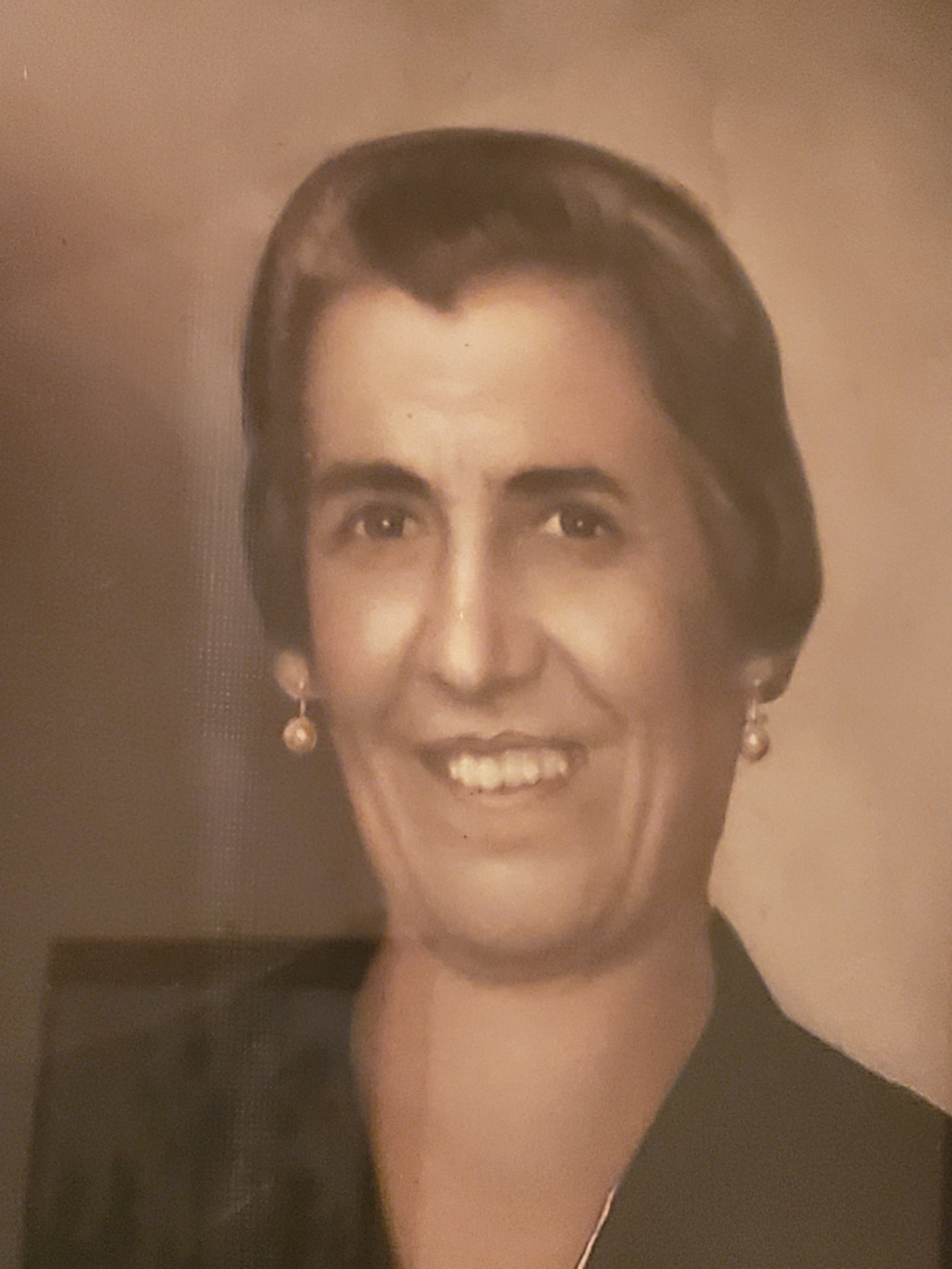
Concetta Gullo, Italy
Years later, Maria Michela’s brother Vincenzo, who had already made his life in the United States, called his sister and Domenicangelo north. Maria Michela and her once-lost husband crossed again, this time to America. And about seven years after that, Antonio and Antonietta packed up their lives, took their two daughters, Maria Carmela and me, and followed.
It is here that we settled. In America. In the life that so many acts of faith had made possible—Antonietta's sacrifice, Antonio's kindness in taking in his future father-in-law before he had ever met his wife, Vincenzo's call across a country, and everyone's willingness, or survival, to keep moving.
The proxy marriage, which had closed the door on any ordinary dream of a life she might have chosen for herself, was the first thread pulled in a weave that took decades to complete. The Hanged Man suspended herself in service of her family, and the Chariot carried not just her but all of them—across oceans, countries, and generations—to where they needed to land.
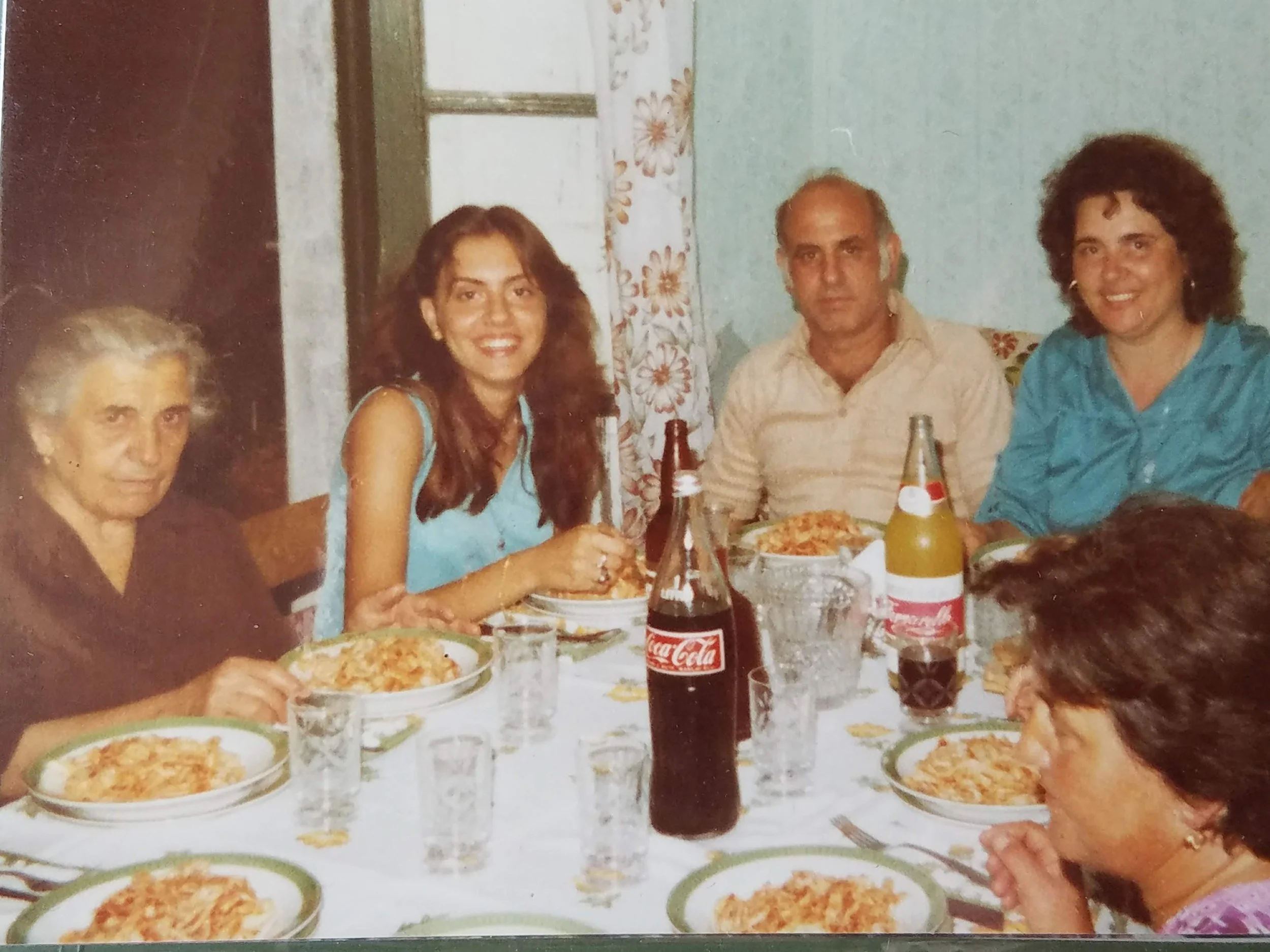
Sunday lunch in Italy. Left to right: Concetta, Connie, Antonio, Antonietta, Maria Giuseppa. Antonio returning to his mother years later.
When I later sat with the historical documents, the immigration records, the marriage certificates, the dates, and the names, they confirmed what the reading had already surfaced. The visible record and the invisible one spoke the same truth. That is what this work does. It does not invent. It reveals what is already there, waiting to be seen and named and understood.
My parents, Antonietta and Antonio, are the hinge point of both family stories. Two people from different towns in Italy, each carrying their lineage’s wound, each crossing an ocean by proxy to a country neither had chosen, finding each other in Venezuela and building a life together from everything that had come before. I am the child of that meeting. This work is what I made from what they handed me.
If you sense that your family story holds answers you have not yet been able to name, ancestral tarot reading is where that work begins—and I am here to help you do it.
When the cards and the documents speak the same truth
Not sure which reading is right for you?
If you are just beginning to explore your family patterns, start with Family Threads.
If you have documents, photographs, or records you have always wanted to understand more deeply, Family Threads: Deep Roots is where that work begins.